



Course Offerings - Summer 2024
Courses are small (12-14 maximum) field-intensive experiences led by nationally recruited instructors.You can register for only one course at a time.
Registration Requests are reviewed for preparation. Registration is accepted until the Friday prior to the first day of class.
Applications for financial support are reviewed beginning March 15. Later applications may be considered if funds are available.
Non-college students are welcome to apply.
UVA Biology Majors Note: Courses satisfy the Biology laboratory and area 3 requirements.
Summer Session I: May 27 - June 14
PLANT CONSERVATION AND DIVERSITY. 3 credits. BIOL 4751 / 7751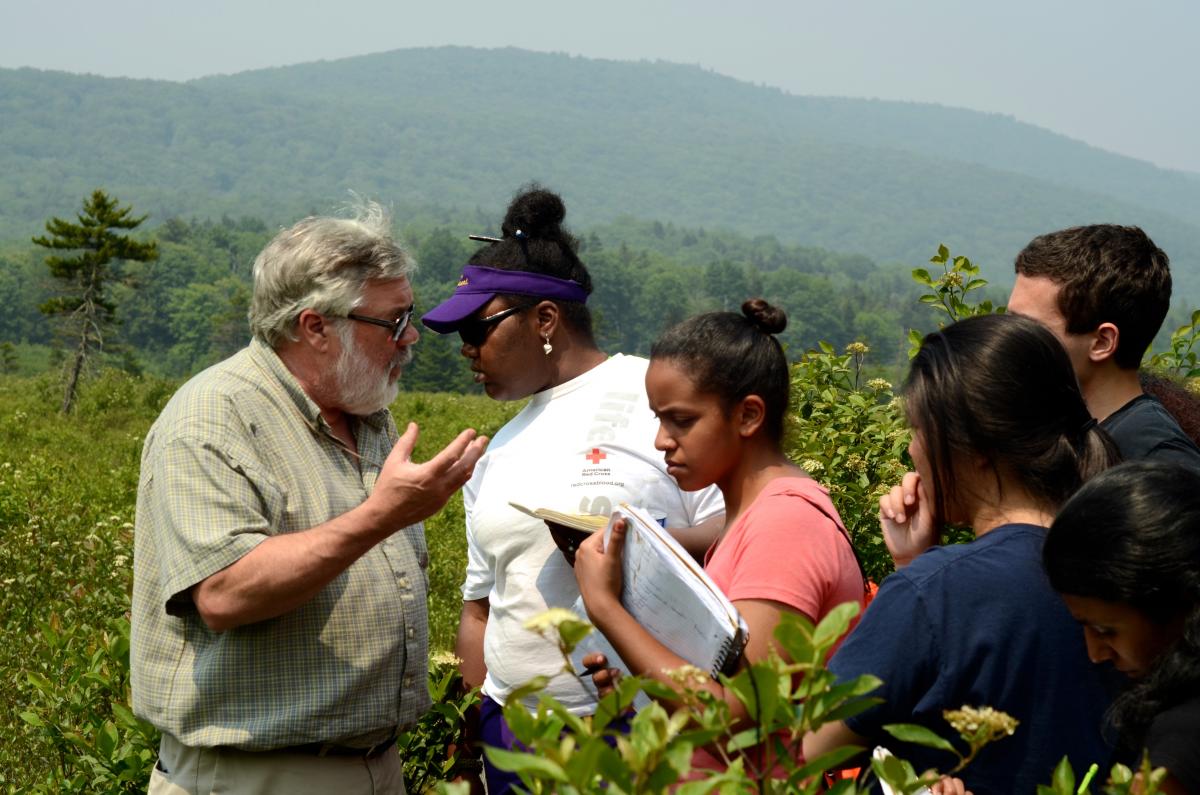

Zack Murrell, Appalachian State University
The extraordinary diversity of the southern Appalachians will serve as a backdrop to explore the world of plants. We will visit unique and wide-ranging regional mountain habitats to study species assemblages and biodiversity. Management activities of state and federal agencies will be examined. We will critique contemporary views of the most effective conservation units (individual, population, species, family, habitat, etc.) and methods.
FIELD HERPETOLOGY. 3 credits. BIOL 4754 / 7754

Christian Cox, Florida International University
We will focus on the ecology and evolution of reptiles and amphibians, leveraging their diversity in the southeastern United States. In the field and laboratory, we will study 1) evolutionary relationships among reptiles and amphibians, 2) key evolutionary innovations that characterize each major lineage,3) reptile and amphibian systems in ecological and evolutionary research, and 4) location and identification of reptiles and amphibians.
This course includes handling vertebrate animals (mammals, birds, reptiles, amphibians, fish). When you complete the Liability Waiver, please make sure you answer "Yes" to the animal handling question.
Summer Session II: June 24 - July 12
FIELD BIOLOGY OF FISHES. 3 credits. BIOL 4755 / 7755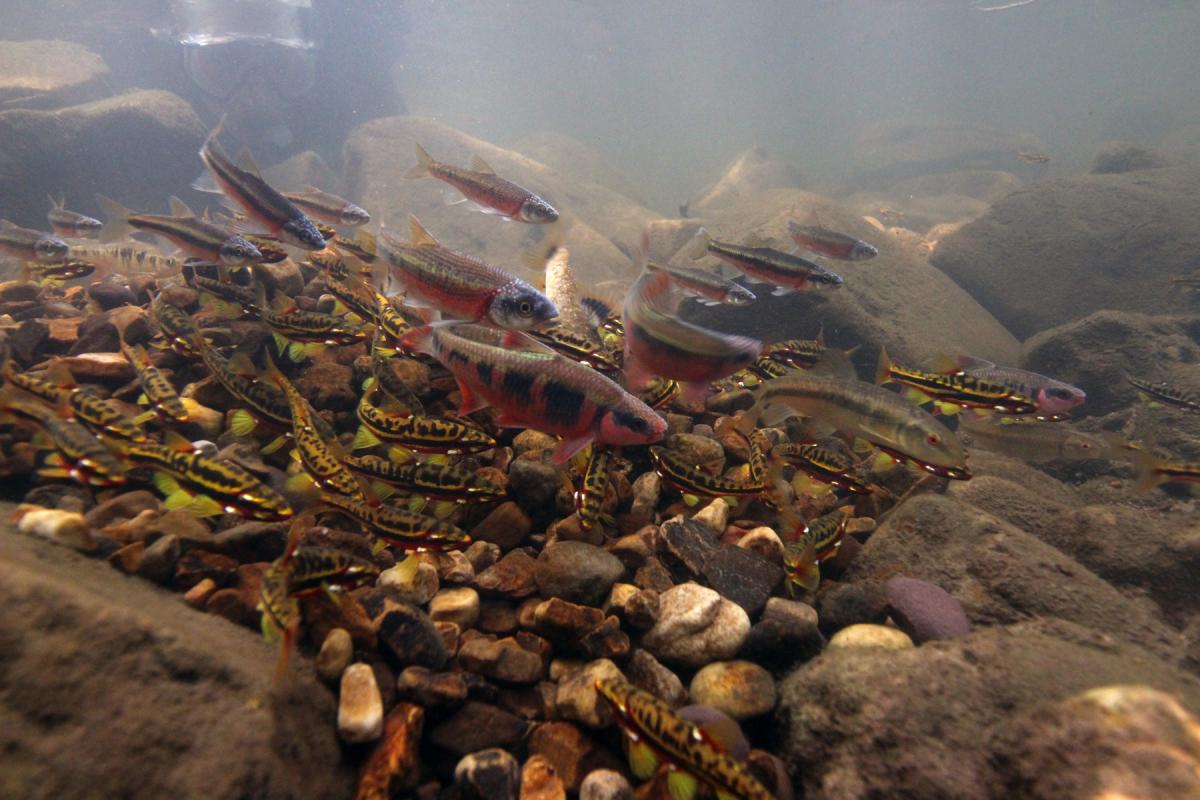
David Neely, Tennessee Aquarium
This class is an immersive introduction to fish biology, with a particular focus on the freshwater fish fauna of eastern North America. Students will develop proficiency in ichthyology through extensive field sampling and in-situ observation. Themes will include fish identification; patterns and drivers of diversity; interactions at individual, population, community, and ecosystem levels; evolution; and influences of human activities.
This course includes handling vertebrate animals (mammals, birds, reptiles, amphibians, fish). When you complete the Liability Waiver, please make sure you answer "Yes" to the animal handling question.
Summer Session III: July 15 - August 2
WILDLIFE DISEASE ECOLOGY. 3 credits. 4761 / 7761
Sonia Altizer, University of Georgia
Dana Hawley, Virginia Tech
Amy Pederson, University of Edinburgh
This course will focus on the ecology and evolution of parasitic organisms in wild animal populations and is designed for advanced undergraduates and graduate students. Students will learn about the incredible diversity of parasitic organisms, arguably the most abundant life forms on the planet, and examine how infections invade and spread through wildlife populations. Throughout the course, an emphasis will be placed on understanding of infectious diseases dynamics at the population level. Specific topics include types of pathogens and their ecological properties, pathogen spread and impacts on host populations, types of transmission, evolution of resistance and virulence, drivers of the emergence of new diseases, parasites in the context of ecological communities, strategies for controlling outbreaks, and the role of parasites in biodiversity and conservation. Students will obtain hands-on experience with field and laboratory techniques, including capture and examination of insects, birds, amphibians, small mammals, and other wildlife near MLBS. Students will also gain experience with data analysis and quantitative methods for understanding disease processes at multiple scales.
This course includes handling vertebrate animals (mammals, birds, reptiles, amphibians, fish). When you complete the Liability Waiver, please make sure you answer "Yes" to the animal handling question.